The SOLAR-MOVE project aims to support the widespread adoption of EVs by exploring the potential of integrated photovoltaic solutions.
Led by the Portuguese Research & Innovation Institute INESC-ID, the Horizon Project will develop customised solutions for different types of solar-powered vehicles and infrastructures.
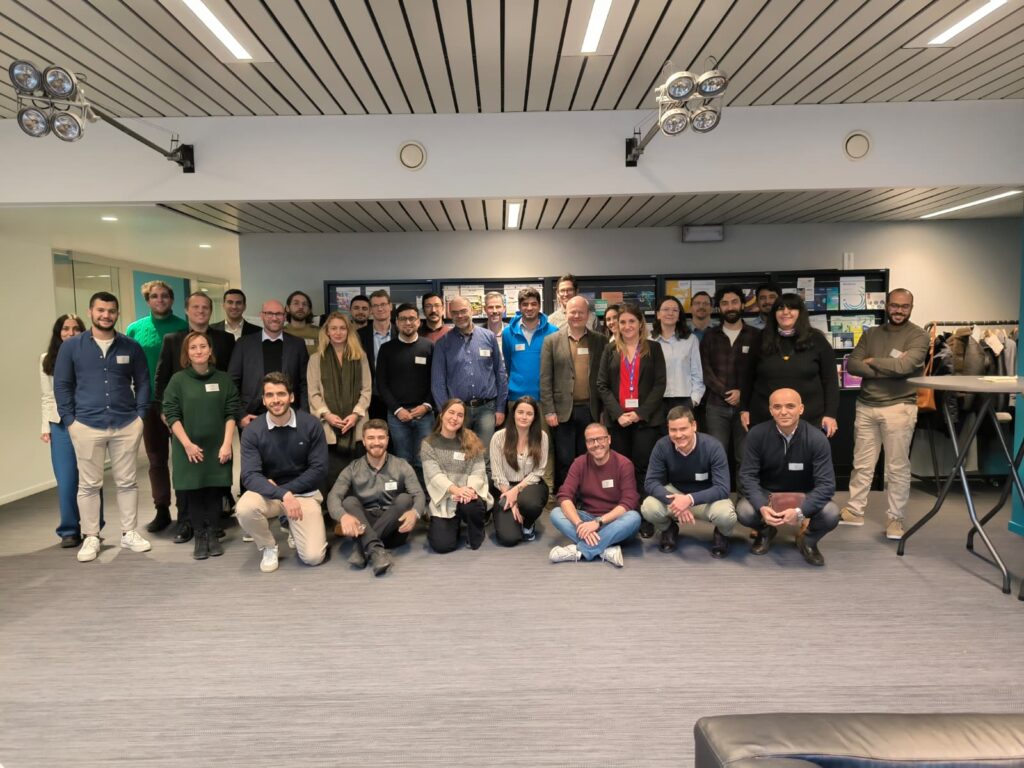
The kick-off meeting, held on 21 November 2025 at the POLIS headquarters in Brussels, one of the consortium partners, laid the foundation for coordinating actions and strengthening cooperation to accelerate the deployment of solar-powered e-mobility solutions.
The project will run for 42 months, concluding in April 2029, with a maximum grant amount of approximately 8,2 million Euros. The consortium will count on the expertise of 35 partners across 16 countries.
SOLAR-MOVE in brief
As road transport becomes electrified, it puts additional pressure on power grids. To address this challenge and facilitate the adoption of electric vehicles (EVs), the SOLAR-MOVE project aims to integrate solar energy directly into vehicles and charging infrastructure so that vehicles can generate part of their own electricity and rely less on the grid.
Throughout its duration, the project has a tri-fold objective:
- increase EV driving range by 5–10 km per day,
- reduce dependence on the grid by 20 to 50% depending on the system,
- create solutions with positive Net Present Value.
To achieve these, the project develops and tests Vehicle-Integrated Photovoltaic (VIPV) and Electric Vehicle Compliant Parking Lot Integrated PV (ePIPV) solutions. The VIPV demonstrations target the main areas of road transport, including cities, residential and service buildings, passenger transport, and highways, while the ePIPV solutions present different features on highways, opportunity charging for e-Buses, municipal ePIPVs, public ePIPVs in commercial areas, and private ePIPVs.
The pilot demonstrations will be conducted in seven countries:
- Denmark: heavy-duty vehicles and an ePIPV parking lot for trucks
- Greece: VIPV garbage truck and municipal ePIPV management
- Turkey: VIPV passenger bus and ePIPV bus opportunity charging
- Portugal: last-mile delivery VIPV and public ePIPV management
- New Zealand: last-mile delivery VIPV and public ePIPV management
- Albania: private ePIPV management
- Slovenia: VIPV motorhome
The project findings will contribute to policy recommendations, guidelines for municipalities on procurement processes, and regulatory frameworks to support the widespread adoption of VIPV and ePIPV technologies.
Stay updated on the project’s news by subscribing to the newsletter, and follow on LinkedIn and Instagram.